NEC (AWG) vs. IEC (mm²) Wire Sizing & Why Breakers Must Obey Ib ≤ In ≤ Iz
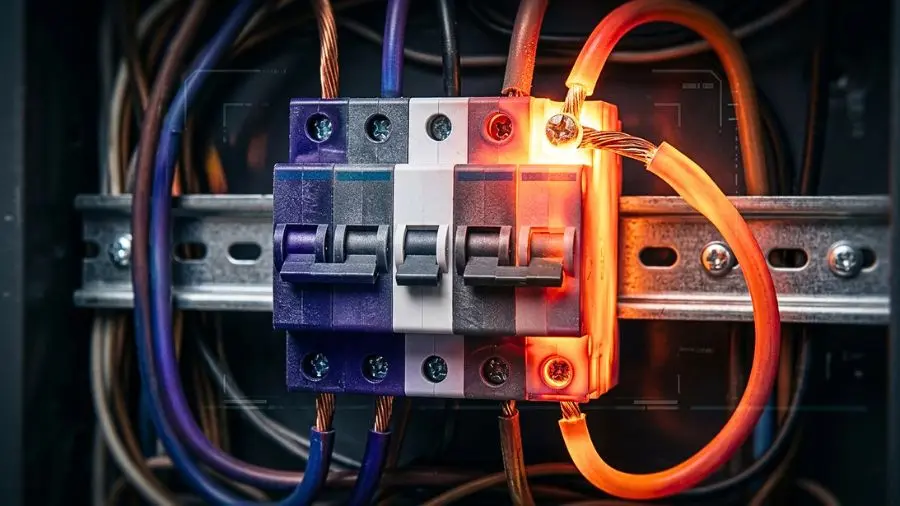
Golden Rule of Overcurrent Protection (Ib ≤ In ≤ Iz): Your breaker or DC fuse must trip before your cable insulation reaches its thermal limit.
One of the most dangerous mistakes in residential panels and solar battery banks is picking a wire gauge solely from a basic amp chart—without checking percentage voltage drop and thermal derating inside conduit at the same time.
1. The Golden Protection Equation: Ib ≤ In ≤ Iz
Whether you follow American NEC or international IEC standards, your circuit must ensure the continuous load current (Ib) is less than breaker rating (In), which must be less than derated cable ampacity (Iz).
⚡ Live Interactive Mini-Calculator: Voltage Drop & Joule Heat
Ohm's Law EngineTest conductor resistance (R = ρ·L/A) and see heat wasted in the cable before installation:
Joule Heat Loss in Cable: 157.5 Watts
Wire Size & Voltage Drop Calc
Stop testing wire gauges one by one! Automatically calculates commercial AWG & metric mm² sizes, breaker trip ratings (Ib ≤ In ≤ Iz), 8 conductor metals (Copper, Aluminum, Pure Nickel, Nichrome), AC Mains, 12V/24V/48V Solar, 40% Conduit Fill, and 40 Offline Guides.
✓ Free on Android (Google Play) • ✓ Works 100% Offline • ✓ 0% Crashes
Frequently Asked Technical Question
Why do electrical wires overheat or melt even when the circuit breaker matches the load amps?
Over long distances or inside conduits with multiple cables at elevated ambient temperatures, conductor resistance causes voltage drop and Joule heating while thermal derating lowers the wire's safe ampacity (Iz) below the breaker's trip rating (In).