RV Propane Safety: Two-Stage Regulator Freeze-Ups, 11" Water Column & Pressure Tests
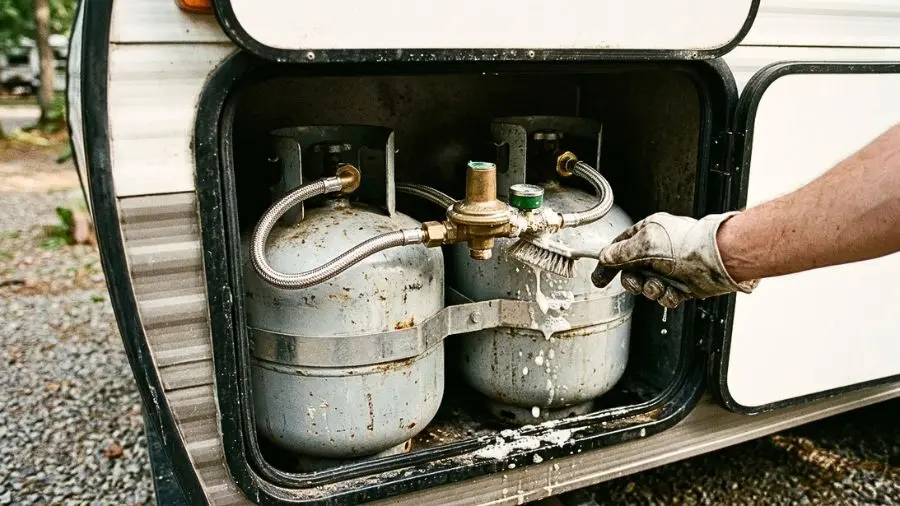
Liquid propane inside tanks sits at up to 200 PSI—two-stage regulators drop that pressure to exactly 11 inches of water column (0.4 PSI) for safe appliance combustion.
Liquid Petroleum Gas (LPG / Propane) is the lifeblood of off-grid RV travel. It runs your ducted furnace on sub-zero mountain nights, provides instantaneous hot water for showers, powers your range top, and keeps your 3-way absorption refrigerator cold for weeks on a single 20-lb or 30-lb bottle. But containing and regulating a high-pressure, flammable gas inside a moving vehicle subject to highway vibration requires a rigorous understanding of gas physics.
1. The Two-Stage Regulation System (11" Water Column)
Inside a standard DOT propane cylinder, liquid propane sits at extreme pressure—ranging from 100 to 200 PSI depending on ambient temperature. If that high-pressure gas reached an RV stove or furnace burner, it would produce an explosive fireball.
Every motorized RV and travel trailer utilizes a mandatory Two-Stage LP Regulator:
- Stage One (High Pressure Drop): Reduces raw tank pressure from ~150 PSI down to an intermediate
10 to 15 PSI. - Stage Two (Low Pressure Calibration): Drops pressure down to the universal RV appliance operating standard: 11 inches of Water Column (11" WC).
To put that in perspective, 11 inches of Water Column is equivalent to only 0.397 PSI (roughly 27.4 millibars)—a whisper of pressure barely strong enough to blow out a birthday candle, yet precisely calibrated for clean, stoichiometric combustion.
2. Why Regulators Freeze on Cold Nights (Joule-Thomson Effect)
A classic winter complaint among campers is waking up at 3:00 AM freezing cold because the furnace died, only to find the propane bottles half-full and the exterior regulator coated in a thick layer of white frost.
Under thermodynamic gas laws (the Joule-Thomson Effect), when high-pressure gas expands rapidly through a narrow orifice into a low-pressure chamber, the gas absorbs immense heat from its surroundings. When your furnace pulls continuous high BTU demand, the internal temperature of the regulator nozzle drops by 30°F to 40°F below ambient. If the propane has even trace parts-per-million moisture, microscopic ice crystals form across the tiny vent orifice, choking off gas flow completely.
Field Fix: Never pour boiling water over a frozen regulator! Protect the regulator under a plastic weather cover to shield it from driving snow and road spray, and request methanol-dehydrated HD-5 commercial propane during winter fills.
3. The Annual Manometer Leak Test
Because RVs vibrate constantly over potholed highways, brass flare fittings and flexible copper gas lines can loosen over time. RVIA standards mandate an annual Low-Pressure Timed Drop Test using a U-tube water manometer or digital differential manometer:
- Shut off all appliance burners and extinguish pilot lights.
- Connect the manometer to the stove pressure test port.
- Pressurize the system to
11" WC, then turn the main cylinder valve shut. - Monitor the manometer for 3 to 5 minutes: the water column must remain dead stationary with ZERO drop. Any pressure drop indicates a gas leak that must be identified with non-corrosive gas leak detection bubble fluid before appliances are operated.
4. The 5-Year Life of LP and CO Detectors
Remember that the safety alarms inside your RV have strict operational lifespans. Both floor-mounted Propane Gas Detectors and wall-mounted Carbon Monoxide (CO) Alarms utilize electrochemical sensors that degrade over time. Under UL standards, they must be replaced every 5 years from the manufacture date stamped on their rear casing, regardless of whether the test button still beeps.
Whether you are checking refrigerator leveling to ensure safe absorption burner flue draft, or balancing appliance slopes, rely on RV & Home Leveler: Solar, HVAC for pinpoint accuracy across all campsite setups.
🚐 Live RV Leveling & Absorption Fridge Safety Simulator
Dual-Axis LevelerCalculate exact leveling block heights under tires & protect your absorption fridge ammonia boiler:
Fridge Status: ✅ SAFE (<3.0° Tilt) — Ammonia refrigerant circulates freely by gravity.
RV & Home Leveler: Solar, HVAC
Park perfectly level without leaving your driver's seat. Voice-guided leveling calculates exact block heights under each tire based on your wheelbase. Includes 3° absorption fridge safety warning, off-grid LiFePO4/AGM solar calculator, and diesel heater altitude tuning.
✓ Free on Android (Google Play) • ✓ Works 100% Offline • ✓ 0% Crashes
Frequently Asked Technical Question
Why does an RV propane regulator freeze up and cover itself in white frost on cold winter nights?
Liquid propane (LPG) inside the tank must boil and expand into vapor to fuel appliances. Under the Joule-Thomson effect, the rapid pressure drop from 150 PSI inside the tank down to 0.4 PSI at the regulator causes intense cooling. If high gas demand occurs (such as an RV furnace running continuously on a freezing night) and trace moisture exists in low-quality propane, the regulator orifice temperature plunges below 32°F (0°C), freezing internal moisture into ice that blocks gas flow.