Winterizing RV Plumbing: Compressed Air Blowout (30 PSI) vs. Propylene Glycol Antifreeze
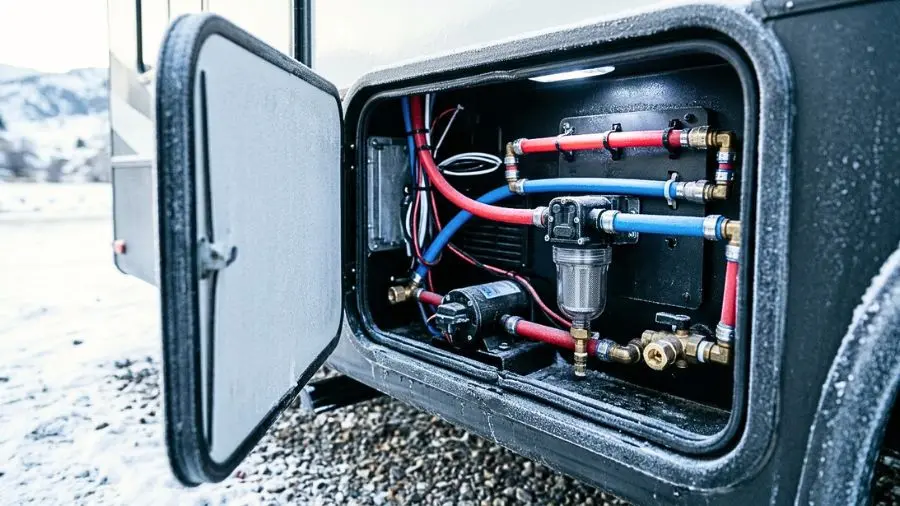
Freezing water expands by 9% with immense hydraulic force—blowing lines with regulated air or pumping pink non-toxic antifreeze prevents cracked PEX fittings.
Water possesses a unique and destructive property in thermodynamics: unlike almost all other liquids that contract as they solidify, water expands by approximately 9% in volume when freezing. Confined inside rigid plastic RV plumbing lines, this phase change generates up to 30,000 PSI of hydrostatic pressure. It will effortlessly crack PEX elbow fittings, shatter 12V water pump housings, and rupture an $800 aluminum water heater tank.
1. Step Zero: The Water Heater Bypass Rule
Before doing anything else, you must locate the water heater bypass valves (usually hidden behind a removable panel inside the RV):
- Turn OFF the 12V water pump and disconnect city water.
- Switch the water heater power switch (both 120V electric and 12V propane) completely OFF.
- Relieve tank pressure by opening the temperature-pressure relief (T&P) valve lever on the outside water heater door.
- Turn the Bypass Valve Assembly to isolate the water heater from the domestic water system.
- Remove the nylon drain plug or sacrificial anode rod with a
1-1/16" socketand allow the 6 to 10 gallons of scalding water to drain completely onto the ground. (NEVER pump antifreeze into your water heater tank—it wastes 6 gallons of antifreeze and produces rotten-egg sulfur smells in spring!).
2. Method A: The Compressed Air Blowout Method
Many RV owners prefer the air blowout method because it leaves zero chemical taste in spring:
- Regulate Pressure (Strict 30 to 40 PSI): Screw a brass quick-connect blowout plug into the city water inlet. Set your air compressor regulator strictly between 30 and 40 PSI. Higher pressure (such as standard 90-120 PSI shop air) will explode RV plastic crimp rings and fittings behind shower walls.
- Sequential Blowout: Turn on air pressure. Move through the RV opening one faucet valve at a time (kitchen cold, kitchen hot, bathroom sink cold, bathroom sink hot, shower cold, shower hot, toilet flush valve, and exterior spray hose) until each valve spews pure air mist with zero water spits.
- Empty the 12V Pump: Run the 12V water pump dry for 20 seconds to expel remaining water from the pump head diaphragm and clear the clear plastic strainer bowl.
3. Method B: Pink Non-Toxic Propylene Glycol Antifreeze
In regions where winter temperatures drop below -10°F (-23°C) for extended weeks, tiny water pockets left in low-point pipe sags can still freeze. The safest method is pumping Pink RV Marine Antifreeze (Propylene Glycol):
Close low point drains. Insert the 12V pump winterizing suction tube into a gallon jug of pink antifreeze. Turn on the pump: it will draw pink antifreeze into the system. Open each faucet one-by-one until solid, un-diluted pink liquid flows out of the spigot.
4. Protecting P-Traps and Waste Gate Valves
Do not forget your drainage plumbing! Pour 2 to 3 cups of pink RV antifreeze directly down the kitchen sink drain, bathroom sink drain, and shower pan drain to displace water sitting inside the P-traps. Finally, pour 1 cup into the toilet bowl to keep the rubber flush seal lubricated and freeze-proof throughout the winter.
Before storing your camper for the cold season, make sure your RV is leveled properly to drain grey and black tanks completely. Check your coach attitude with RV & Home Leveler: Solar, HVAC to eliminate trapped stagnant water before the hard freeze arrives.
🚐 Live RV Leveling & Absorption Fridge Safety Simulator
Dual-Axis LevelerCalculate exact leveling block heights under tires & protect your absorption fridge ammonia boiler:
Fridge Status: ✅ SAFE (<3.0° Tilt) — Ammonia refrigerant circulates freely by gravity.
RV & Home Leveler: Solar, HVAC
Park perfectly level without leaving your driver's seat. Voice-guided leveling calculates exact block heights under each tire based on your wheelbase. Includes 3° absorption fridge safety warning, off-grid LiFePO4/AGM solar calculator, and diesel heater altitude tuning.
✓ Free on Android (Google Play) • ✓ Works 100% Offline • ✓ 0% Crashes
Frequently Asked Technical Question
Why must you strictly use pink non-toxic propylene glycol antifreeze instead of green automotive antifreeze when winterizing an RV?
Automotive green antifreeze is made of ethylene glycol, a deadly sweet-tasting chemical that is lethal to humans and pets even in trace micro-doses. Because RV plumbing delivers drinking water, cooking water, and shower water from the same fresh water lines, plumbing codes and RVIA standards mandate using only non-toxic pink RV/marine antifreeze (USP food-grade propylene glycol), which flushes clean in spring without leaving toxic chemical residues.